Hagia Sophia Mosaics 2026 — Are They Covered? Where to Find Them
The Hagia Sophia mosaics are still visible in 2026: the Deësis, Empress Zoë, and Komnenos portraits in the upper gallery. Which mosaics are covered, where to find each one, and how to plan your visit.
Yes — you can still see the Hagia Sophia mosaics in 2026. The upper gallery, open to tourists with the €25 ticket, holds the most important surviving pieces — the Deësis Mosaic, the Empress Zoë and Komnenos imperial portraits — and none of them are covered. Only the ground-floor and apse mosaics are curtained during prayer times, and those were never part of the tourist route anyway. Here's where to find each one.
The Hagia Sophia Mosaics — What Few Visitors Realize
The mosaics of Hagia Sophia have survived Byzantine iconoclasm, the 1453 Ottoman conquest, the conversion to a mosque, the conversion to a museum, and the 2020 reconversion to a mosque. Over 1,500 years, half of them were destroyed — but what remains is one of the world's most important Byzantine art collections.
This guide focuses on what you'll actually see: the surviving mosaics on the upper gallery, their stories, and how to find them during your visit.
For practical visiting information (tickets, opening hours, prayer times), see our complete Hagia Sophia guide.
Quick Summary
- Deësis Mosaic — the most beautiful, in the south gallery's side corridor
- Emperor Komnenos Mosaic — south gallery, 12th century
- Empress Zoë Mosaic — south gallery, rare imperial portrait
- What you won't see: ground-floor mosaics — only worshippers can go down
- What's missing: Christ Pantocrator in the dome — gone or covered
- Location: Hagia Sophia upper gallery, 3 minutes' walk from Hotel Perula
Why These Mosaics Are Special
During Byzantine iconoclasm (726–843), all figurative mosaics in Hagia Sophia were scraped off or whitewashed. After the 9th century, new mosaics were created, and these post-iconoclasm works are exactly what survived — imperial family portraits and the Deësis compositions.
After the 1453 Ottoman conquest, Mehmed II didn't destroy the mosaics — he had them plastered over. This was the best form of accidental preservation: under the plaster, the mosaics were preserved for 500 years, in much better condition than if they had been exposed to air and weather.
They were uncovered during 19th-century renovations and Atatürk's 1934 conversion to a museum. What you see today is the result of restorations done between 1934 and 1985.
The Deësis Mosaic — The Most Beautiful Piece
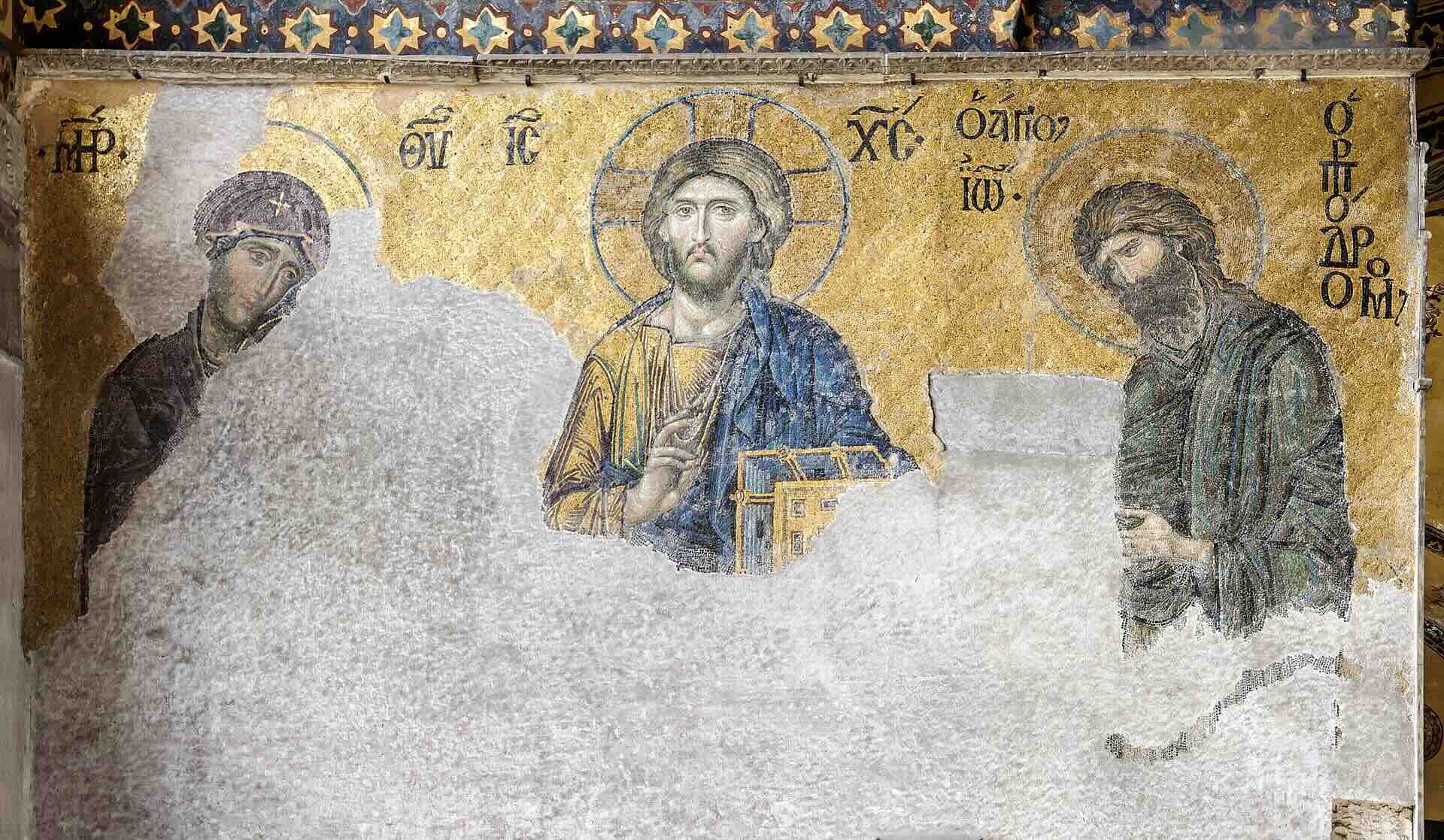
If there's one thing not to miss in Hagia Sophia, it's the Deësis Mosaic. It's located in the side corridor of the south gallery — turn left from the tourist entrance and walk to the far end of the gallery.
What it depicts: Christ Pantocrator in the center, with the Virgin Mary on the left and John the Baptist on the right. Both intercessory figures turn toward Christ in a gesture of pleading — hence the name (Deësis is Greek for "supplication").
When it was made: around 1261, immediately after the Byzantines retook Constantinople from the Latin Crusaders. It marks the beginning of the Palaiologan Renaissance — the renewal of Byzantine art.
Why it's special:
- The faces show photographic detail — Christ's melancholy gaze, Mary's sorrow, John the Baptist's blade-thin expression
- In all of Byzantine art history, this is one of the most humanistic depictions
- Only the upper half survives — the lower portion was destroyed by the 1346 earthquake and later damage
How to find it: at the tourist entrance, go up to the gallery, then head toward the south gallery (right from the central space). The Deësis is in a side corridor, slightly hidden — many visitors walk past it. Look for a marble railing through an arched opening — the mosaic is in a side chamber, well-lit.
The Imperial Mosaics — Political Art
In another part of the south gallery you'll find two important imperial mosaic compositions. Both show how Byzantine emperors used iconography to reinforce their own legitimacy.
Emperor Komnenos Mosaic (1118–1143)
What it depicts: Emperor John II Komnenos and his wife, Empress Irene, with the Virgin Mary in the center holding the infant Jesus. The husband and wife honor the Virgin with gifts — Komnenos offers a purse (symbolizing financial support of the church), Irene offers a scroll (symbolizing the founding charter).
The interesting detail: there's a third person beside them — their son, Alexios. This part wasn't originally planned, but was added to the composition after Alexios's death (he died at 24). The figure must have been made shortly before his death — depicted with a pale, sickly expression.
Empress Zoë Mosaic (11th century)
What it depicts: Empress Zoë (around 1042) and her husband Emperor Constantine IX Monomachos, with Christ enthroned in the center.
Why this image is interesting: Zoë married three times during her reign, and the portrait of her husband was always redone with each new marriage. If you look closely, you can see that the face and inscription are by a different hand — slightly different style, slightly different materials. This is an 11th-century photoshop scene: the empress's current husband was placed over the previous face.
Christ's face and Zoë's face, however, are original — over 950 years old.
The Imperial Door Mosaic
Coming up from the ground floor, you don't pass through the Imperial Door — but above it is Hagia Sophia's oldest figurative mosaic (late 9th century).
What it depicts: Emperor Leo VI the Wise kneels before Christ, who sits on a throne. Around Christ, medallions show Mary and the Archangel Gabriel.
Its significance: this mosaic is one of the first imperial images of the post-iconoclasm period. It's also called the Apology Mosaic — Leo VI married four times (a serious church scandal at the time), and this composition shows the emperor in a posture of repentance before the church congregation.
How to see it: unfortunately, since it's above the Imperial Door on the ground floor, you can only see it during off-prayer times with special permission — or as a Muslim worshipper. It's not visible from the upper gallery.
What You Won't See — The Lost Mosaics
Hagia Sophia once contained many other major mosaic compositions that are no longer visible:
Christ Pantocrator in the dome — originally there was a massive Christ depiction in the center of the dome. It was never restored after 14th–15th century damage, and there's no trace of it today. The 9-meter diameter mosaic was likely once the world's largest Christ portrait.
The four seraphim in the dome's pendentives — three are plastered over (under mosque regulations), one was temporarily uncovered in 2009 but has since been partly recovered. In current condition they're not clearly visible.
The apse Christ mosaic — at the eastern end of the church, in the prayer sanctuary. An original Byzantine work, but covered with a curtain during Muslim prayer as it serves as a mosque. Not open to tourists.
Apostle figures on the walls — once an entire series, today only fragments remain.
The 2020 Change and the Mosaics
When Hagia Sophia became a mosque again in July 2020, many concerns were raised about the future of the mosaics. The Turkish government committed to:
- The mosaics will not be whitewashed or painted over
- During prayer times, textile curtains or lighting are used to cover the figurative depictions
- They remain visible during tourist hours
So far (as of early 2026) this agreement is working. The upper gallery mosaics are not covered and are visible at all tourist times. The ground floor and apse mosaics are curtained or dimmed during prayer times.
If you're worried about what you'll see: you can fully see the upper gallery mosaics, and these are precisely the most beautiful ones.
How to Plan a Mosaic-Focused Visit
If you're coming specifically for the mosaics, I recommend:
- Buy tickets online in advance (25 EUR) — don't queue
- Go at 9:00 opening — fewer crowds, better light
- Avoid the Friday 12:30–14:00 closure — 90-minute gap
- At the tourist entrance, turn left — toward the south gallery
- Deësis first — at the farthest point, because it's the "highlight"
- Then back for the imperial mosaics
- Walk slowly — the light and details deserve 30+ minutes
- Bring a camera — don't use flash, but the mosaics photograph well in natural light
The full mosaic-focused visit takes about 1.5 hours.
Other Istanbul Mosaic Sites
If the Hagia Sophia mosaics moved you, two other sites are worth considering:
Chora Museum (Kariye Camii) — in northern Istanbul, with mosaics many consider better preserved than Hagia Sophia's. It represents the peak of 14th-century Palaiologan Renaissance art, and although also converted to a mosque in 2020, it partially reopened as a tourist museum in 2025. About 25 minutes by taxi from Sultanahmet.
Basilica Cistern — no mosaics here, but the carved marble Medusa-head columns are part of ancient Byzantine spolia. 300 meters from Hagia Sophia, 5 minutes' walk from Hotel Perula.
Hotel Perula's Location
Hagia Sophia is 3 minutes' walk from us. If you're interested in the mosaics and want to view them properly, come at 9:00 opening — by then a relaxed breakfast on our rooftop terrace finishes comfortably.
Our front desk is happy to help plan your visit — particularly with timing it to avoid prayer times. We speak English, Hungarian, and Turkish, which especially helps if you have questions about Byzantine-Ottoman history.
Frequently Asked Questions
Can you still see the mosaics in Hagia Sophia in 2026? Yes. The upper gallery — home to the Deësis Mosaic and the imperial portraits — is open to tourists daily from 9:00 to 18:00 with the €25 ticket, and its mosaics are fully visible at all tourist times.
Are the Hagia Sophia mosaics covered? The upper gallery mosaics are not covered. Since the 2020 reconversion to a mosque, only the ground-floor and apse mosaics are covered with curtains or dimmed lighting during prayer times, and the dome seraphim remain mostly plastered over. The tourist route is unaffected.
Where is the Deësis Mosaic in Hagia Sophia? In the side corridor of the south gallery, on the upper level. From the tourist entrance, go up to the gallery and head right toward the south gallery; the Deësis sits in a side chamber behind an arched opening with a marble railing — many visitors walk straight past it.
What is the oldest mosaic in Hagia Sophia? The Imperial Door mosaic of Emperor Leo VI kneeling before Christ, from the late 9th century — the first imperial image made after Byzantine iconoclasm ended. It sits above the ground-floor Imperial Door, so it is unfortunately not visible from the tourist gallery.
Why are so many Hagia Sophia mosaics missing? Byzantine iconoclasm (726–843) destroyed all the early figurative mosaics; the 1346 earthquake and centuries of wear took more, including the giant dome Pantocrator. Paradoxically, the Ottoman plaster applied after 1453 preserved the survivors for 500 years until their uncovering in the 19th and 20th centuries.
Summary
- Hagia Sophia's mosaics are 1,500-year survivors — worth coming for
- The Deësis Mosaic is the most beautiful piece, don't miss it
- The upper gallery is for tourists — that's where the main mosaics are
- The ground-floor and dome mosaics are not currently accessible
- 1.5 hours is enough for a thorough mosaic visit
- Combine with the Chora Museum (north) for a deeper mosaic experience
For practical visiting information (tickets, opening hours, prayer times), see our complete Hagia Sophia guide.
Stay 3 Minutes from Hagia Sophia
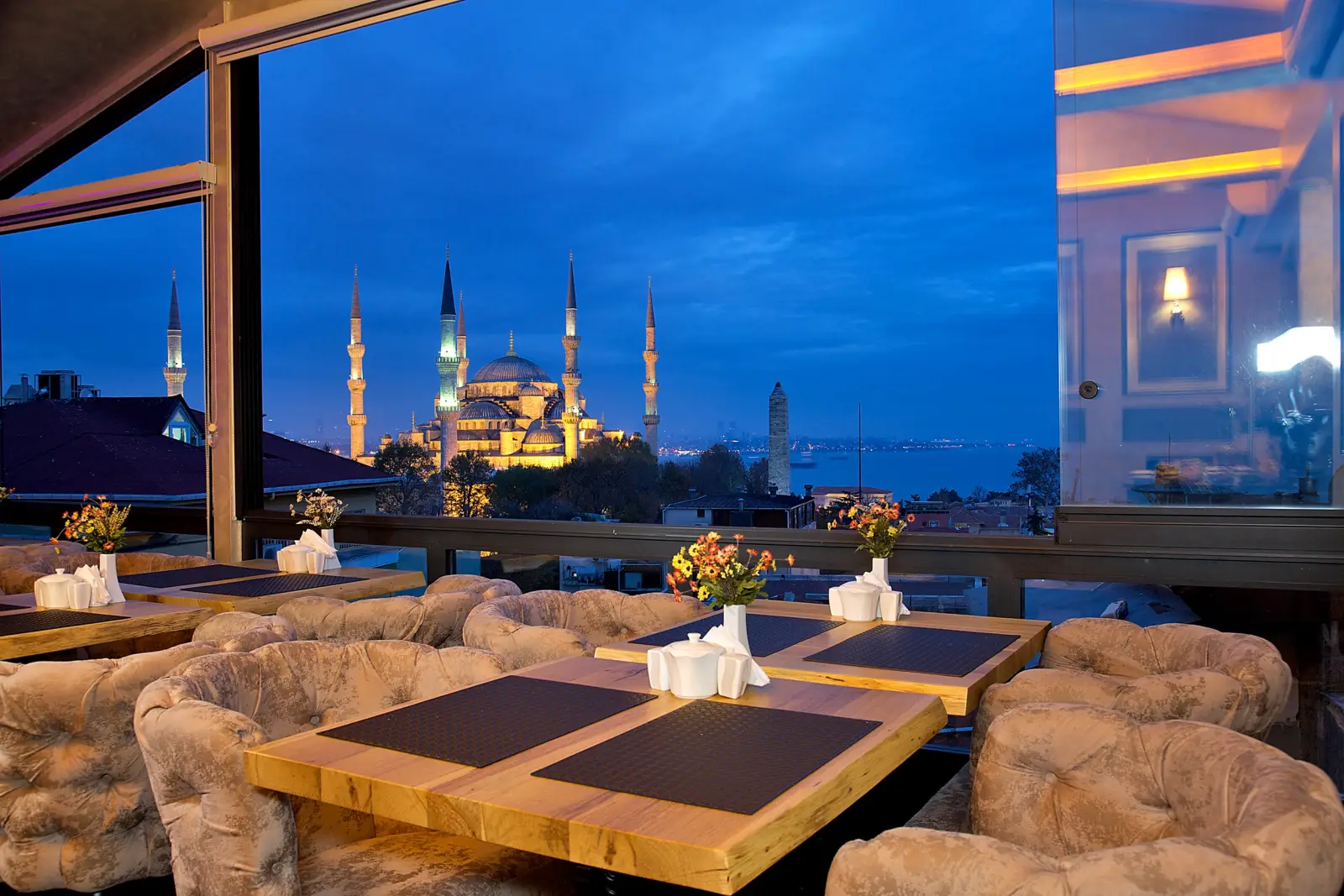
Hotel Perula is a boutique hotel in the heart of Sultanahmet — rooftop breakfast terrace with Blue Mosque views, 4.4★ from 520+ Google reviews, and every landmark in this guide within walking distance.
10% Below Our Booking.com Rate — Non-refundable rate, booked directly with us.
More Guides
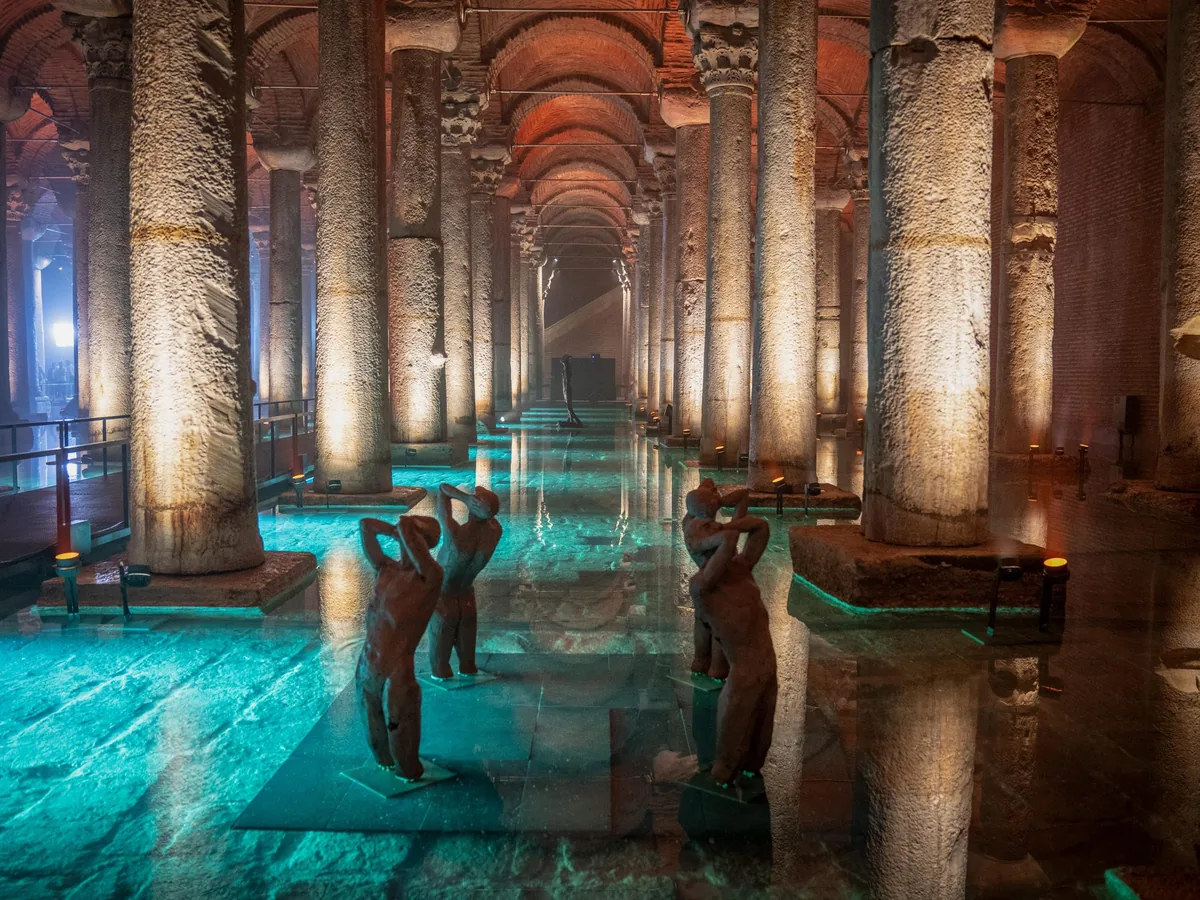
Basilica Cistern 2026 — Tickets, Hours & Medusa Heads
Basilica Cistern 2026: 30 EUR daytime, 45 EUR evening, open daily 9:00–18:30. Where the Medusa heads are, and whether it's worth it.
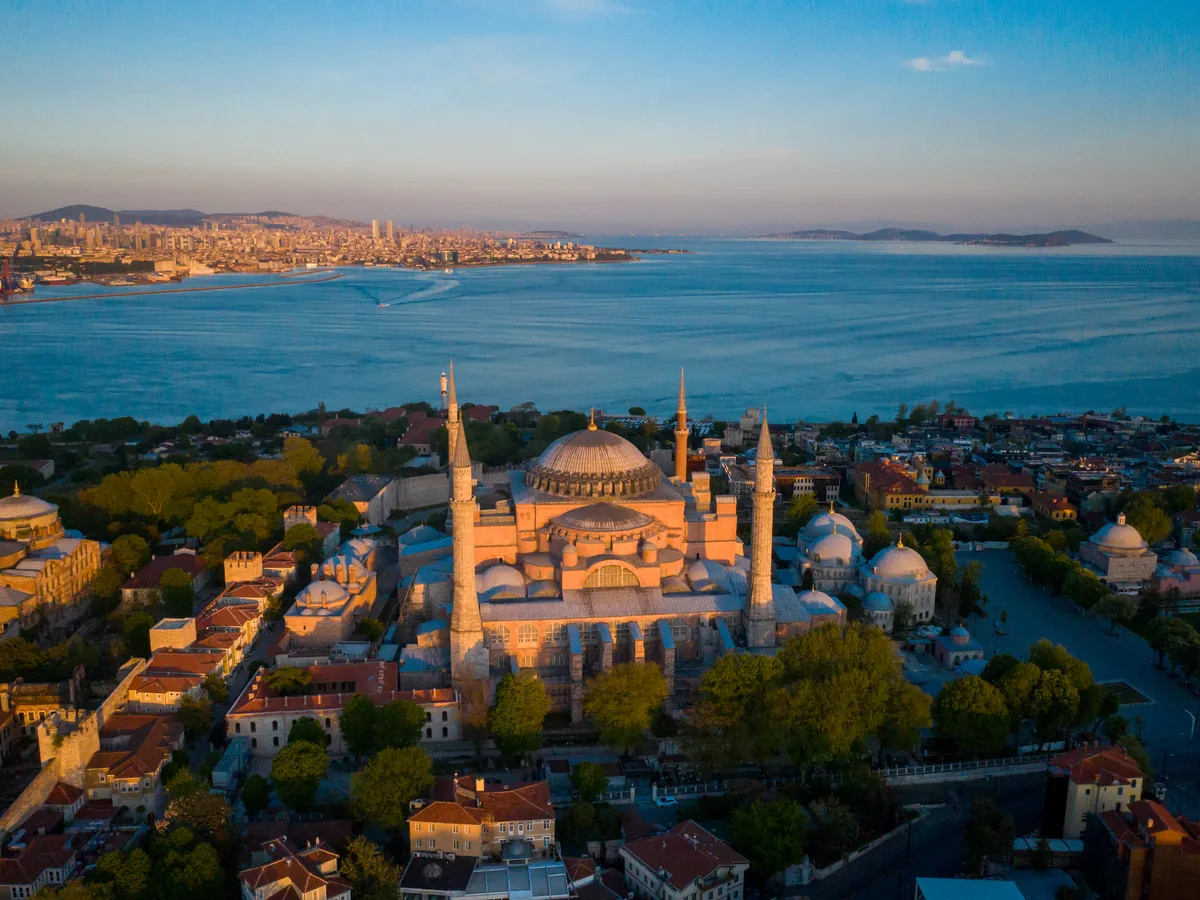
Things to Do in Istanbul 2026 — 16 Best Sights
The 16 places worth your time in Istanbul, with 2026 prices and closing days: Hagia Sophia €25, Blue Mosque free, Topkapı 2,750 TL.
Blue Mosque vs Hagia Sophia 2026 — Which to Visit
One is free, one costs €25, and both close for prayers. The honest comparison, plus opening hours, dress code and tickets.