Istanbul Sultanahmet Guide — A Local's Walking Tour
A complete walking guide to Sultanahmet from the team at Hotel Perula. Landmarks, distances, restaurant tips, and practical advice from people who live here — not a travel blogger who visited for 3 days.
Sultanahmet: Istanbul's Historic Heart
If you're visiting Istanbul for the first time, Sultanahmet is almost certainly where you'll spend most of your time — and for good reason. This is where the Roman, Byzantine, and Ottoman empires left their marks within a few hundred meters of each other. The Blue Mosque, Hagia Sophia, Topkapi Palace, the Basilica Cistern, and the Grand Bazaar are all here, all walkable.
We live and work here at Hotel Perula every single day. This guide wasn't written after a weekend trip — these tips come from years of guest feedback and firsthand experience. Everything listed here is walking distance from our front door.
Distances from Hotel Perula
Before diving into details, here's a quick overview of how close everything is:
- Blue Mosque (Sultanahmet Camii) — 100m, 2 min walk
- Hippodrome — 150m, 2 min walk
- Hagia Sophia — 250m, 3 min walk
- Basilica Cistern — 300m, 4 min walk
- Grand Bazaar (Kapalıçarşı) — 400m, 5 min walk
- Topkapi Palace — 600m, 8 min walk
- Spice Bazaar (Mısır Çarşısı) — 900m, 12 min walk
- Galata Bridge — 1.2km, 15 min walk
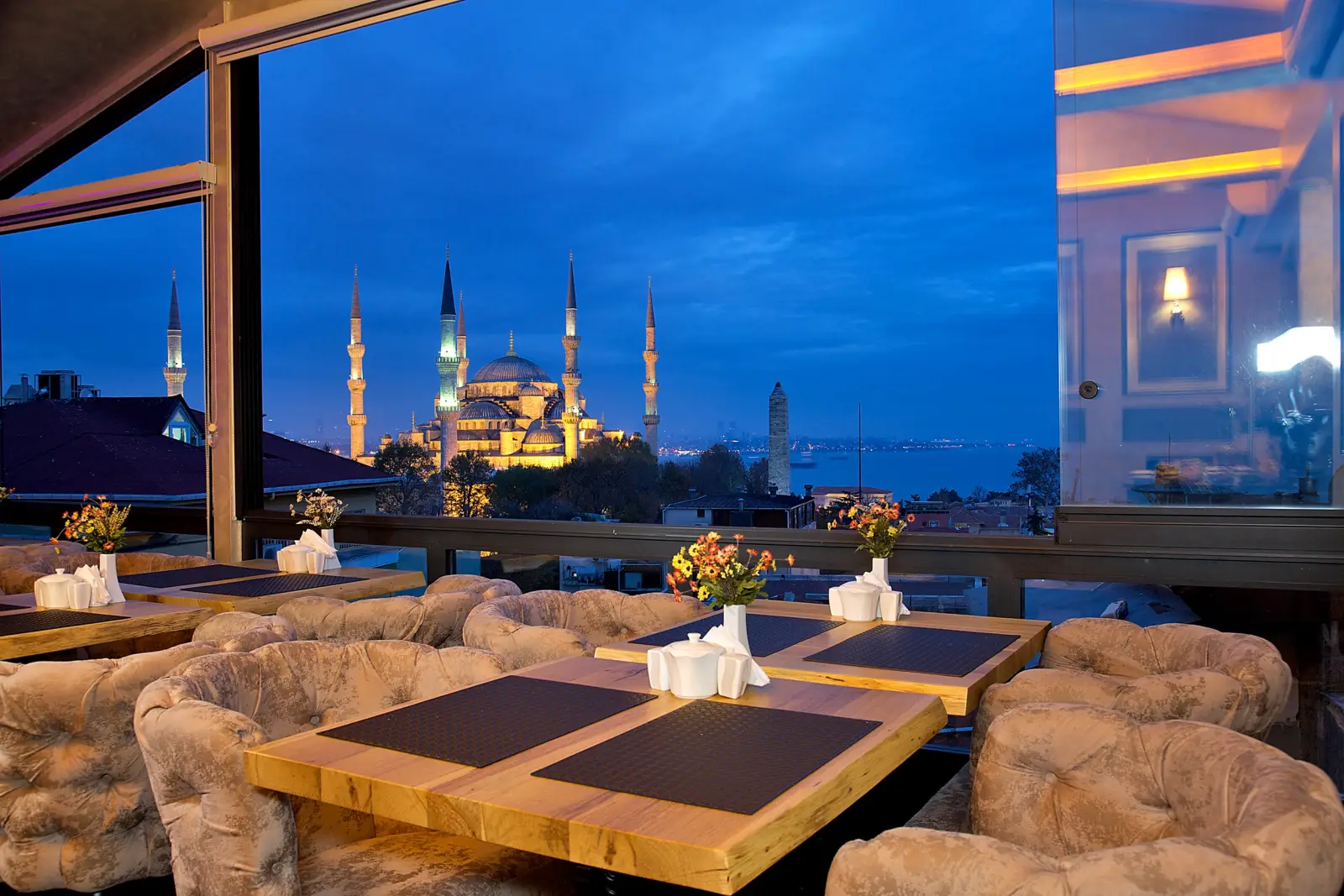
This is one of the most historically dense neighborhoods on earth, and you can see most of it from our rooftop terrace while having breakfast.
Blue Mosque — What Most Guides Don't Tell You
The Blue Mosque is literally 100 meters from our hotel. It's stunning, free to enter, and absolutely worth visiting — but there are a few things to know.
The mosque is an active place of worship, which means it closes five times a day for prayer. Prayer times shift with the seasons, but the midday and afternoon prayers typically affect tourists the most. The simplest approach is to go around 9 AM — fewer crowds and it's open. On Fridays, the midday prayer is longer and the mosque can be closed for up to 90 minutes.
You'll need to remove your shoes at the entrance (they provide bags), and women must cover their heads — free scarves are available at the door. Shorts and bare shoulders aren't permitted for men either. These are religious requirements, not tourist rules — please respect them.
Inside, the mosque's six minarets and over 20,000 hand-painted İznik tiles are breathtaking. The blue color that gives it its name actually comes from the interior tiles and painted ceiling — from outside, it's not blue at all.
Hagia Sophia — How to Skip the One-Hour Queue
Hagia Sophia has been operating as a mosque again since 2020, which means entry is free. This is both good news and bad news: good because you don't need a ticket, bad because the queues can be incredibly long.
Our tip: go at opening time, 9 AM, or late afternoon after 4 PM. Between 11 AM and 2 PM, the queue can stretch to 45–60 minutes, especially in spring and autumn. The building remains open during prayer times, but certain areas may be restricted.
The interior is extraordinary — Byzantine mosaics (several are still visible) coexist with Ottoman calligraphy in the same space. The upper gallery, which offers the best photo opportunities, is accessible via the staircase on the left side.
From Hotel Perula, Hagia Sophia is 250 meters away. If you leave right after breakfast on our terrace, you can be there by 9:05.
Basilica Cistern — Istanbul's Hidden Wonder
The Basilica Cistern is the attraction most tourists regret almost skipping. It's a massive underground water reservoir from the 6th century, supported by 336 columns. The water surface, atmospheric lighting, and Medusa head carvings at the column bases create an unforgettable atmosphere.
The entrance is directly opposite Hagia Sophia, 300 meters from us. Buy your ticket online in advance at muze.gen.tr — the on-site queue is often longer than the visit itself.
You'll spend about 30–40 minutes inside. Best times are early morning or late afternoon — midday brings tour groups and crowds.
Topkapi Palace — The Half-Day Commitment
Topkapi Palace was the residence of Ottoman sultans for over 400 years, and it genuinely deserves half a day of your time. It's 600 meters from our hotel — an 8-minute walk through Gülhane Park, which is itself a pleasant stroll with trees and Bosphorus views.
The ticketing system has two tiers: a base ticket for the palace courtyards and exhibition halls, and a separate ticket for the Harem section. Get both — the Harem is where you truly understand how the sultans lived.
The palace is closed on Tuesdays. Many visitors forget this and stand disappointed at the gates — don't be one of them.
The view of the Bosphorus from the palace gardens is one of the best photo spots in all of Istanbul. There's a restaurant in the gardens (Konyalı), but the prices are steep — better to head back to the neighborhood for lunch.
Grand Bazaar — First-Timer Tips
The Grand Bazaar (Kapalıçarşı) is one of the oldest and largest covered market systems in the world: over 4,000 shops, 61 streets, and you will get lost. That's fine — getting lost is the point.
It's 400 meters from us, a 5-minute walk. The market generally opens between 8:30–9:00 and closes around 7 PM. It's closed on Sundays.
Some practical advice:
Bargaining is part of the culture. The listed price is almost never the final price — especially for leather goods, carpets, and jewelry. Start at half the asking price and meet somewhere in the middle. This isn't offensive — it's tradition.
Buy gold and silver from shops inside the bazaar, not near the entrances. Interior shopkeepers are established traders whose reputation is at stake — those near the entrances tend to target tourists.
For spices and sweets, head to the Spice Bazaar (Mısır Çarşısı) instead, 900 meters from us — better prices and quality.
Where to Eat in Sultanahmet — And Where Not To
This is the part most guides don't write honestly. Sultanahmet is full of tourist traps — restaurants with nice terraces and English menus that charge high prices for mediocre food.
Our recommendations (all within walking distance):
Breakfast: The best option is our rooftop terrace — not bias, but a Turkish buffet breakfast served with views of the Blue Mosque and Hagia Sophia is hard to beat.
Lunch: Try Sultanahmet Köftecisi near the tram stop. This place has been operating since 1920 and their meatballs (köfte) are legendary. Cheap, fast, and authentic. Watch out: several imitators operate nearby with similar names — the original is on the corner of Divanyolu street.
Dinner: Walk down to the Kumkapı neighborhood (15 minutes), where local seafood restaurants are significantly better and cheaper than anything in Sultanahmet. If you'd rather stay in the neighborhood, Matbah Restaurant at the Ottoman Hotel Imperial serves excellent Ottoman cuisine — not cheap, but the experience is worth it.
Street food: Grab a simit (sesame-crusted bread ring) from any street vendor in the morning, and a balık ekmek (fish sandwich) at the Galata Bridge in the afternoon — the bridge is a 15-minute walk and well worth it.
Getting Around
You can walk to almost everything in Sultanahmet. But for trips further afield, the T1 tram is your best friend — the stop is 2 minutes from us.
The Istanbulkart is mandatory. It's a rechargeable transit card available at any tram stop. Without it, you cannot board a tram, bus, or metro — cash is not accepted.
The tram connects you to the Galata Bridge (Eminönü stop, 2 stops), Taksim Square (transfer at Kabataş to the funicular), and the Spice Bazaar.
Be careful with taxis. Istanbul taxi drivers sometimes take longer routes or "forget" to start the meter. The safest option is the BiTaksi app — Turkey's equivalent of Uber. The route and price are fixed upfront, so no surprises. For getting from the airport, see our complete airport transfer guide.
When to Visit
Istanbul is a year-round destination, but the best times are:
April–May and September–October are ideal: pleasant weather (18–25°C), fewer crowds than summer, and everything is open. The tulip festival in April is particularly beautiful.
Summer (June–August) is hot (30–35°C) and queues are longer. If you visit then, early mornings and late afternoons are your friends.
Winter (December–February) is cold and rainy, but the city is less crowded, prices are lower, and a snow-covered Blue Mosque is unforgettable. You can still have breakfast on our rooftop terrace in winter — it's heated and sheltered.
Summary
Sultanahmet is the starting point for most Istanbul trips for good reason. In two or three days, you can comfortably walk to all the major landmarks. The key is planning: visit popular spots early in the morning, avoid midday hours, eat where the locals eat, and don't be afraid to get lost in the bazaar.
If you have questions, reach out — we're happy to help you plan your trip.
Planning your Istanbul trip?
Book Your StayMore Guides
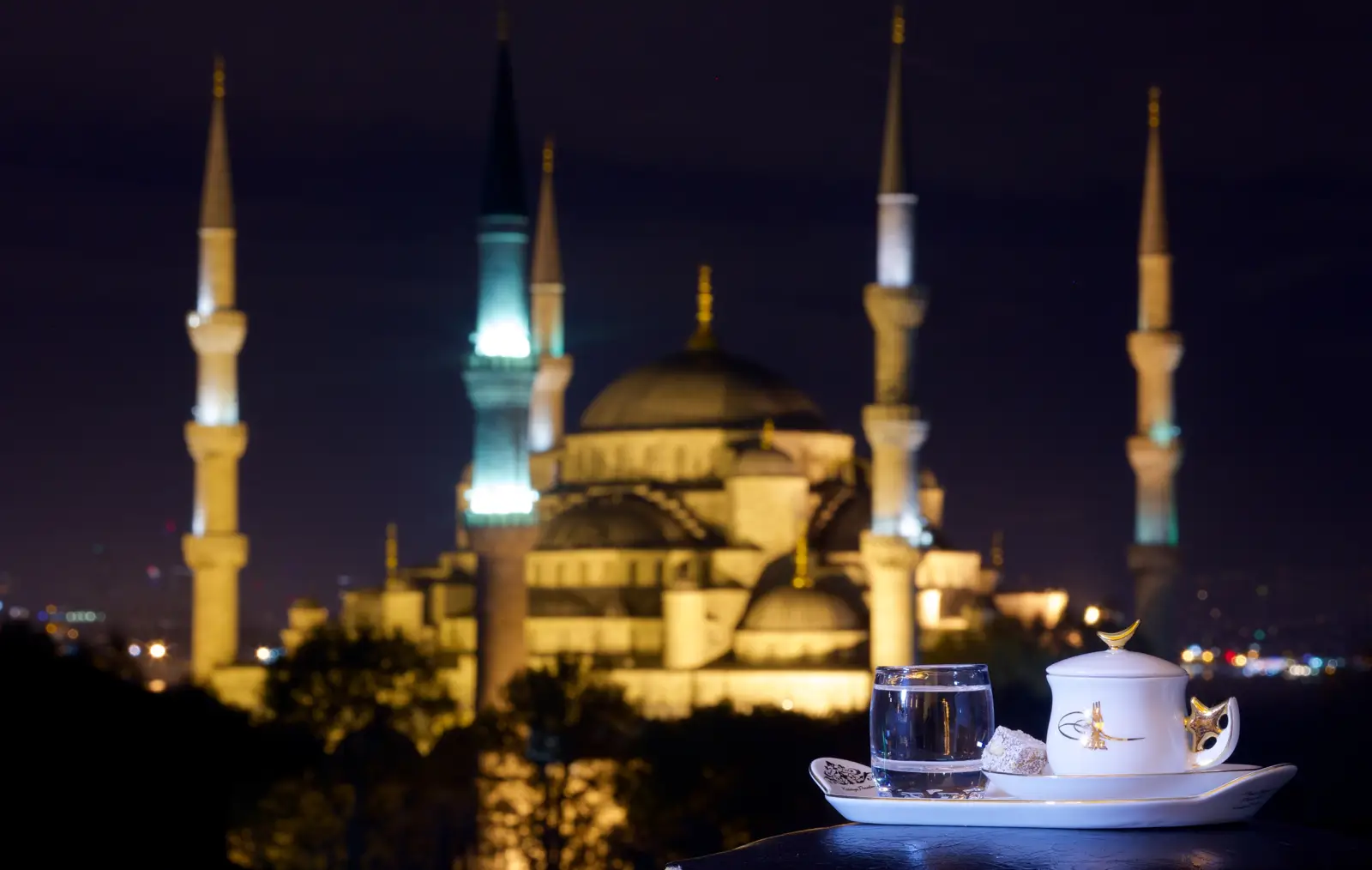
Istanbul Airport to Sultanahmet — Complete Transfer Guide
Every option for getting from IST and SAW airports to Sultanahmet: Havaist bus, metro, taxi, and private transfer. Practical tips from the Hotel Perula team.
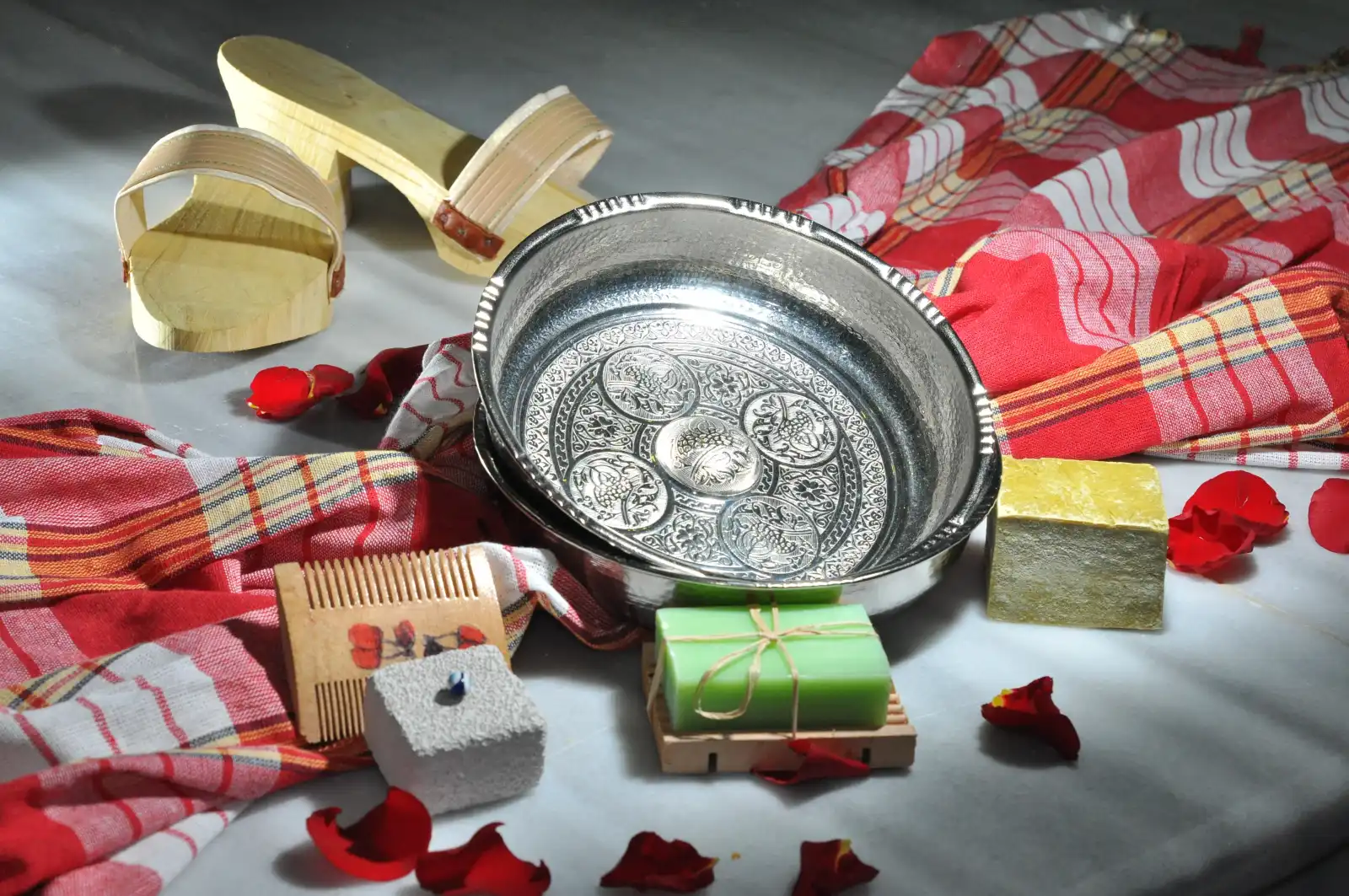
First Time Turkish Hammam — What to Expect, What to Bring
A complete guide to your first Turkish bath experience in Istanbul. What happens during a hammam session, etiquette, what to bring, and the best hammams near Sultanahmet.
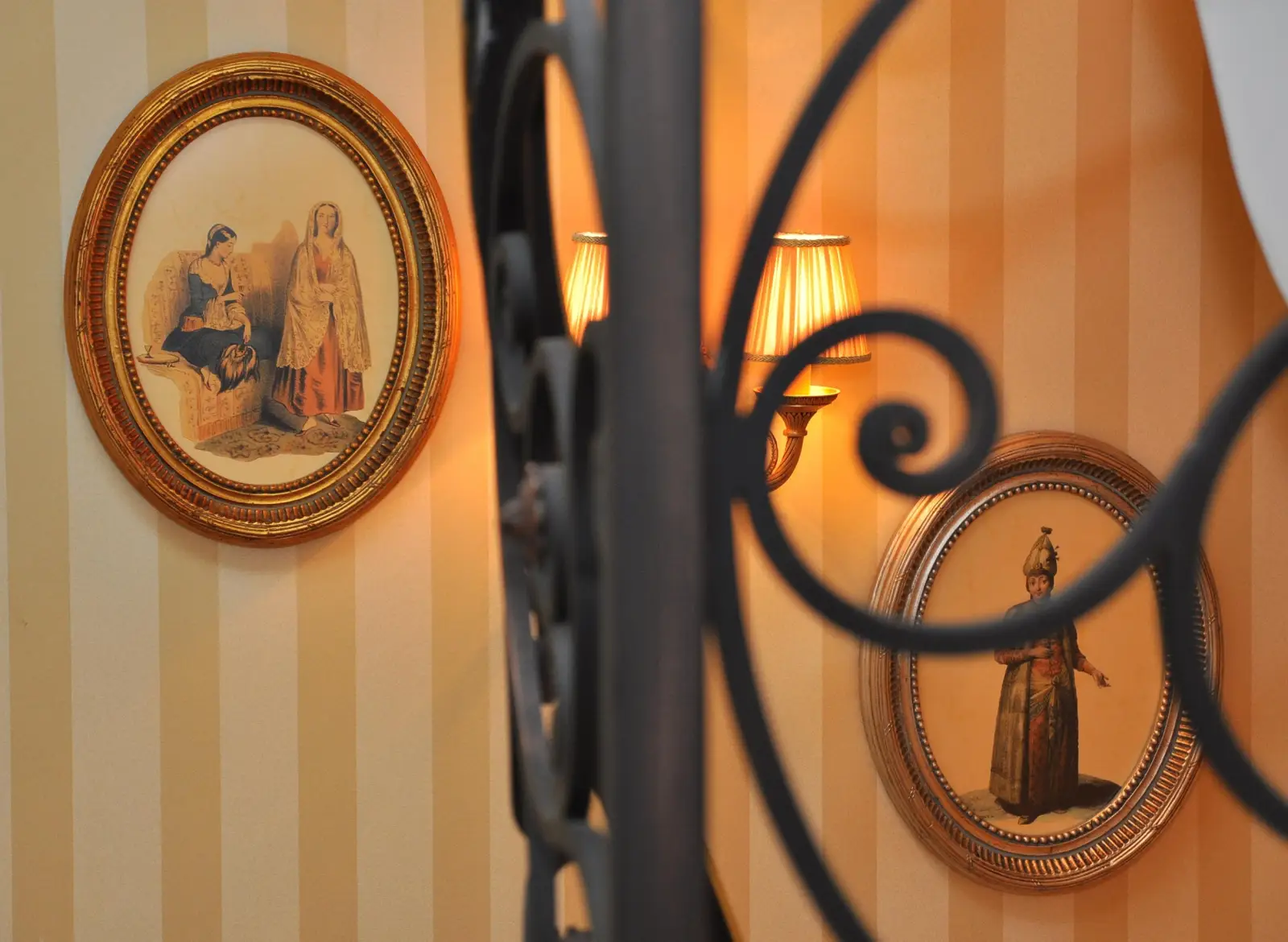
Turkish TV Series Filming Locations in Istanbul — From the Magnificent Century to The Golden Boy
Where were your favorite Turkish series filmed? A location-by-location guide from Sultanahmet to the Bosphorus — with walking distances from Hotel Perula.