Basilica Cistern 2026 — Tickets, Hours & Medusa Heads
Basilica Cistern 2026: 1,950 TL (~€35) by day, 3,000 TL evening, open daily 9:00–18:30. Where the Medusa heads are, and whether it's worth it.
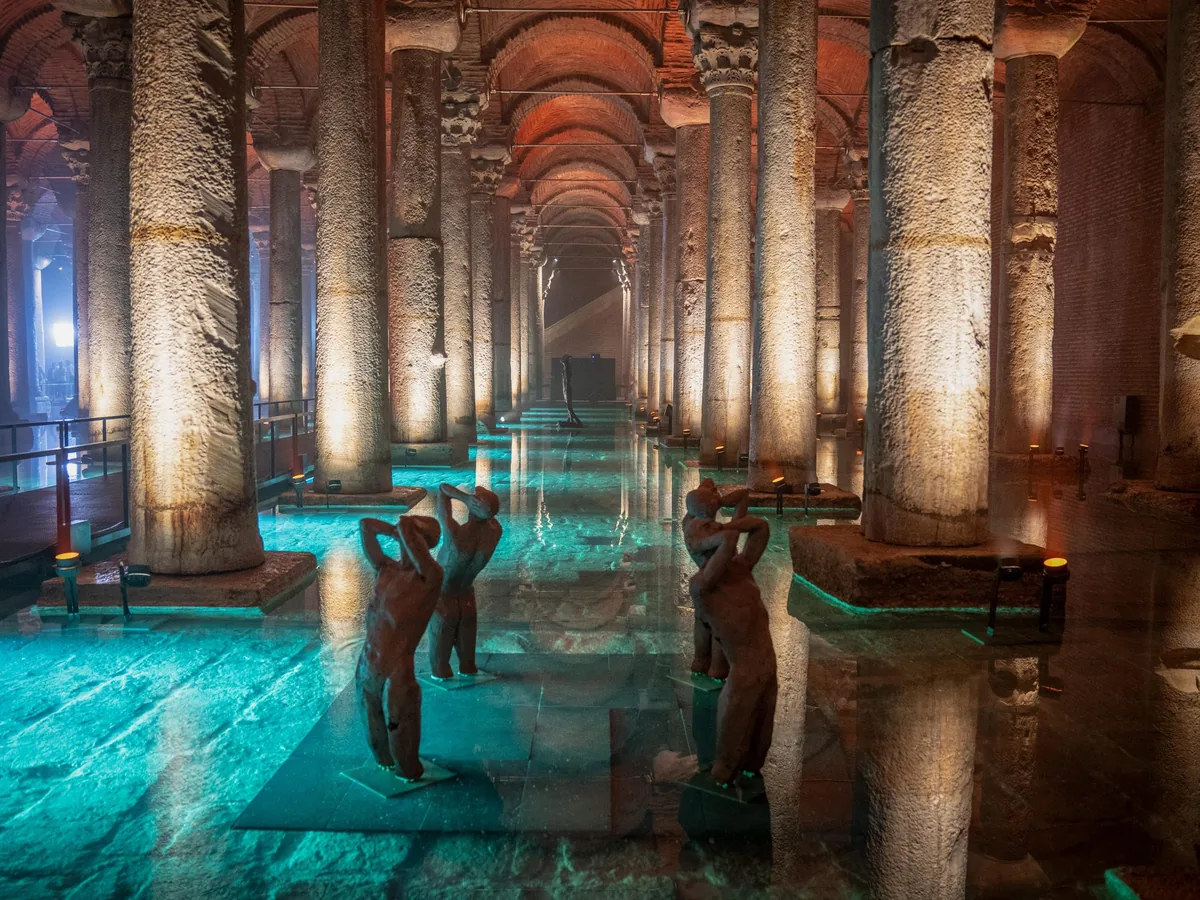
The Basilica Cistern (Yerebatan Sarnıcı) is a 6th-century Byzantine water reservoir one street from Hagia Sophia, held up by 336 marble columns and famous for two carved Medusa heads at its northwest corner. Entry is 1,950 TL (about €35) for the standard daytime visit and 3,000 TL (about €54) for the evening light-and-sound programme. It's open daily 9:00–18:30 with no weekly closing day, and the Museum Pass Istanbul is not valid here. Most visitors need 30–45 minutes. It's a 4-minute walk from our front door, and everything below is what you actually need to plan the visit.
Quick Summary
- Ticket: 1,950 TL (
€35) daytime · 3,000 TL (€54) evening · children under 7 free - Hours: daily 9:00–18:30, last entry around 18:00; evening programme 19:30–22:00
- No weekly closing day — unlike Topkapı (closed Tuesdays) or Dolmabahçe (closed Mondays)
- Museum Pass Istanbul is NOT valid — you need a separate ticket
- Entrance: Yerebatan Caddesi 1/3, about 100m west of Hagia Sophia
- Time needed: 30–45 minutes; 60–75 for the evening programme
- Temperature inside: 15–18°C year-round — bring a layer, even in August
- Not step-free: 52 stairs down, no wheelchair access
Basilica Cistern Tickets and Opening Hours 2026
Ticket price: 1,950 TL (about €35) for foreign visitors on the standard daytime visit — the price set by İBB Kültür A.Ş. in February 2026. The evening ticket (19:30–22:00) costs 3,000 TL (about €54) and includes the light-and-sound installation and, on some nights, live performances. Children under 7 visiting with their family enter free. Euro figures are at October 2026 rates (€1 ≈ 55 TL); you pay in lira, by card.
Opening hours: daily 9:00–18:30, with last admission around 18:00 — the gate closes about 30 minutes before the site does. The evening programme runs 19:30–22:00 on a separate ticket. There is no weekly closing day, which makes the Cistern a useful Tuesday option when Topkapı Palace is shut.
A note on buying online. The Cistern is run separately from the Ministry of Culture's museums, so it is not sold on muze.gen.tr and the Museum Pass doesn't cover it. Ticketing for this site has changed more than once in recent years, and most of the ticket pages that rank highest in search are resellers charging well over face value. If you're unsure which channel is official when you travel, ask us at the front desk — we're 300 metres away and we keep track.
Booking ahead is worth it. In peak season the on-site queue runs 30–90 minutes, which is longer than the visit itself.
Where the Entrance Is
The entrance is at Yerebatan Caddesi 1/3, in a low stone pavilion signposted "Yerebatan Sarnıcı", about 100 metres west of Hagia Sophia. It's easy to walk past — people expect something monumental and it's a modest doorway leading down.
From Hotel Perula it's a 4-minute walk. From the Sultanahmet tram stop (T1), about 5 minutes. If you're coming from Hagia Sophia, turn away from the square and cross the road; the pavilion is on your left.
The Medusa Heads — What They Are and Where to Find Them
The Cistern's most famous feature is a pair of enormous carved stone heads of Medusa, the gorgon of Greek myth, reused as column bases.
Where they are: in the northwest corner, at the far end of the walkway — you'll reach them near the end of the standard route. They sit at the foot of two neighbouring columns. One is upside down; the other is turned on its side.
Why they're positioned that way is genuinely unresolved, and you'll hear four explanations:
- Structural. The heads happened to be the right height to support the columns, and the orientation is an engineering decision, not a symbolic one.
- Religious. Inverting a pagan figure symbolised Christianity's victory over the old gods.
- Superstition. In myth Medusa's gaze turned people to stone; a head that isn't looking at you can't do any harm.
- Spolia. The blocks were salvaged from an older Roman structure and reused purely for their size, and the orientation is incidental.
The most credible reading combines 1 and 4 — practical reuse, convenient height, no symbolism intended. That's less romantic than the legends, but it's how most of this building was assembled.
What Else to Look For
The Cistern reopened after a major restoration completed in 2022, with a raised metal walkway, new lighting, and contemporary art installations suspended from the vaults.
The columns. Standing in the middle of the main hall, the 336 columns open into a forest in every direction. They're each about 9 metres tall, and many are spolia — recycled from older Roman and Byzantine buildings, which is why the capitals don't match. Look for the variety: Corinthian, Doric, plain.
The Column of Tears. On the southern side, one column is carved with rows of teardrop-shaped hollows. It's usually explained as a memorial to the enslaved workers who died building the Cistern, though the pattern more likely comes from a Byzantine stonemason's decorative repertoire.
The fish. The Cistern still holds half a metre or so of water, and pale carp swim in it. They aren't decorative — fish were originally introduced to control algae and indicate water quality.
The scale. 138 metres long, 65 metres wide, 9-metre ceilings, built to hold roughly 80,000 cubic metres of water. It supplied the Great Palace and later Topkapı, fed from the Belgrade Forest via aqueducts more than 20km away — including the Valens Aqueduct, still standing across the city.
Is the Basilica Cistern Worth €35?
An honest answer, because it's a real question at this price.
Yes, if: you like atmosphere over artefacts. There is no collection here — the building is the exhibit, and the combination of lit columns, reflections and near-silence is genuinely unlike anywhere else in the city. It's also the best thing to do in Istanbul in bad weather or brutal August heat, and it's excellent for photography.
Maybe not, if: your trip is short. On a two-day visit, Hagia Sophia and Topkapı give you more for the money. The Cistern is 30–45 minutes and, unlike those two, doesn't reward a long stay.
A tip on the evening ticket: at 3,000 TL it's about 50% more than daytime. Worth it if you specifically want the light-and-sound installation or a performance; not worth it just to avoid crowds, since the last hour before 18:30 is already quiet.
Best Time to Visit
Early morning (9:00 opening) and the last hour before closing are quietest. Midday, roughly 11:00–15:00, is when tour groups arrive and the walkway gets slow — the route is one-way and narrow in places, so a group ahead of you sets your pace.
Bring a layer. It's 15–18°C inside all year. In August that's a relief; in January it's colder than the street.
Wear grippy shoes. The walkway is metal and permanently damp from condensation.
Accessibility: the only way in is 52 steps down, with no lift. The Cistern is not wheelchair accessible and is difficult with a walking stick or a pushchair.
The James Bond Connection
The Cistern appears in "From Russia with Love" (1963), where Bond is rowed by boat beneath Istanbul to spy on the Soviet consulate. The scenes were shot here, and the boat is real — visitors can't row through it now, but the vaults you walk under are the ones on film.
It's had a long screen career since, including The International and Dan Brown's Inferno, which is why a fair number of visitors arrive recognising a place they've never been.
How It Fits Into a Sultanahmet Day
The Cistern is small enough to slot into a bigger day rather than anchor one. The most efficient sequence from the old city:
- 9:00 — Hagia Sophia at opening, before the queue builds
- 10:30 — Basilica Cistern, a 2-minute walk away
- 11:30 — Blue Mosque, free, but check prayer times
- 13:00 — lunch away from the square, where prices drop by a third
- 14:30 — Topkapı Palace with the Harem ticket, two to three hours
That's four of Istanbul's biggest sights in a day, all within a few hundred metres of each other. For the full version see our 3-day Istanbul itinerary, and for how much the day costs end to end, our Istanbul costs and prices guide.
If you're deciding between the two ticketed giants first, our Blue Mosque vs Hagia Sophia comparison covers which is worth your time and money.
Frequently Asked Questions
How much does the Basilica Cistern cost in 2026?
The standard daytime ticket is 1,950 TL (about €35) for foreign adults. The evening ticket (19:30–22:00), which includes the light-and-sound installation, is 3,000 TL (about €54). Children under 7 visiting with their family enter free. The Museum Pass Istanbul is not valid here.
What are the Basilica Cistern opening hours?
Daily 9:00–18:30, with last entry around 18:00. The evening programme runs 19:30–22:00 on a separate ticket. There is no weekly closing day — it's open every day of the year, including Mondays and Tuesdays.
Is the Basilica Cistern included in the Museum Pass?
No. The Cistern is operated separately from the Ministry of Culture's museums, so the Museum Pass Istanbul doesn't cover it and it isn't sold through muze.gen.tr. You need a separate ticket.
How long do you need at the Basilica Cistern?
Most visitors spend 30–45 minutes on the standard route. Allow 60–75 minutes for the evening programme, since the light-and-sound show runs in cycles and you'll want to see a full one.
Where are the Medusa heads in the Basilica Cistern?
In the northwest corner, at the far end of the walkway, serving as the bases of two adjacent columns. One is upside down, the other on its side. They come near the end of the standard route, so don't turn back early.
Is the Basilica Cistern worth visiting?
For most people, yes — but manage expectations. It's an atmosphere and architecture experience rather than a museum, and it takes well under an hour. If your trip is very short, Hagia Sophia and Topkapı Palace give you more per euro.
Is the Basilica Cistern wheelchair accessible?
No. Access is via 52 steps with no lift, and the walkway is metal and damp. It's difficult for anyone with limited mobility and not possible in a wheelchair.
Can you take photos inside?
Yes, and most of the visit is photography. The lighting is dramatic and the reflections in the water are the reason most people come. A phone handles it fine; a tripod is unnecessary and awkward on a narrow walkway.
Is it cold inside the Basilica Cistern?
Yes — 15–18°C year-round, regardless of the weather above ground. Bring a light layer in summer; in winter it can feel colder than the street.
Stay Three Minutes Away
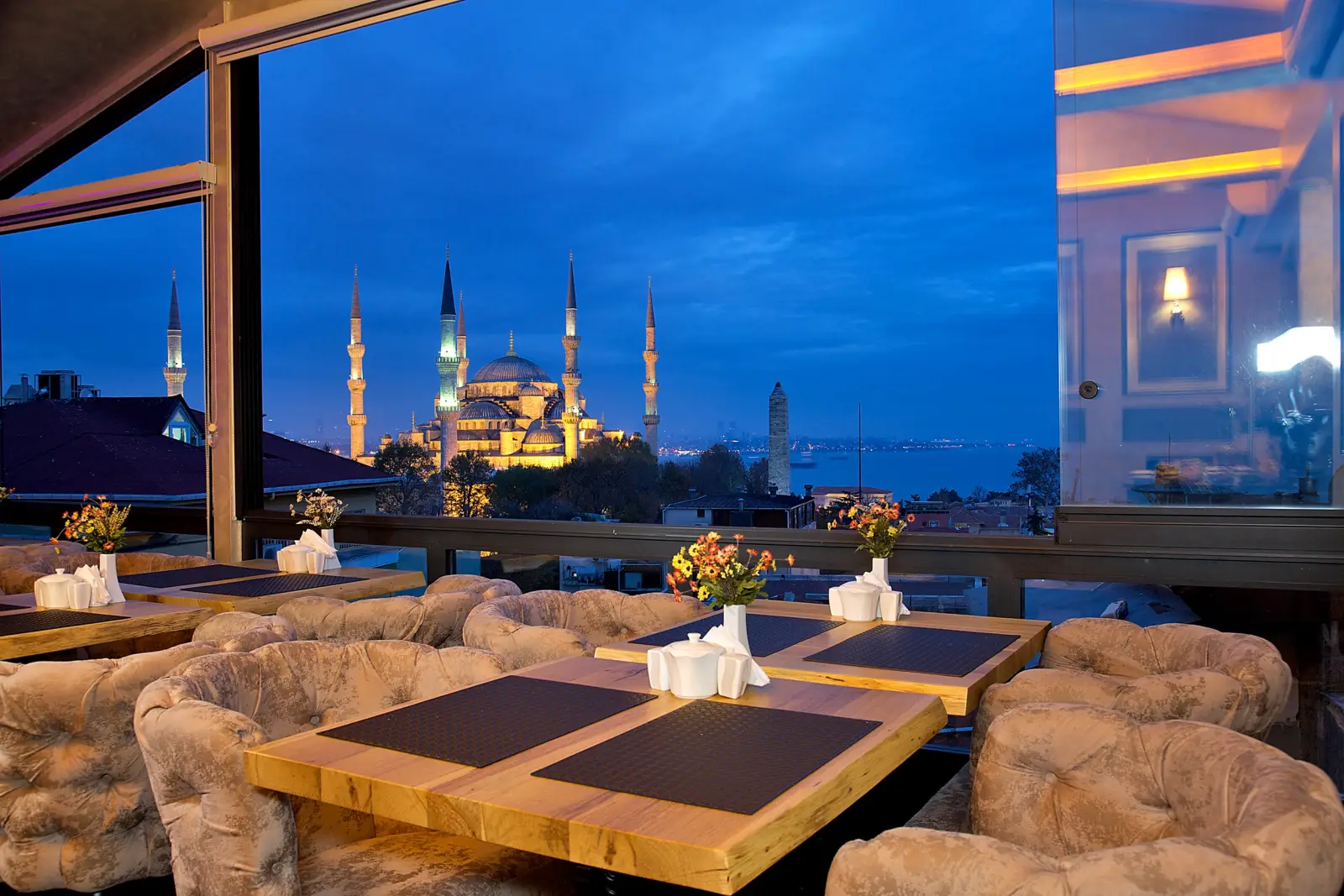
Hotel Perula sits in Binbirdirek, in the heart of Sultanahmet — the Basilica Cistern is a 4-minute walk, the Blue Mosque 2 minutes, and Hagia Sophia 3. You can do the entire old-city circuit on foot without paying for a single tram ride, and Turkish breakfast on the rooftop terrace is included in every rate.
See our rooms, check dates and rates, or read what a hotel in Sultanahmet costs in 2026 if you're comparing districts.
Stay 3 Minutes from Hagia Sophia
Hotel Perula is a boutique hotel in the heart of Sultanahmet — rooftop breakfast terrace with Blue Mosque views, 4.4★ from 530+ Google reviews, and every landmark in this guide within walking distance.
10% Off When You Book Direct — Non-refundable rate, booked directly with us.
More Guides
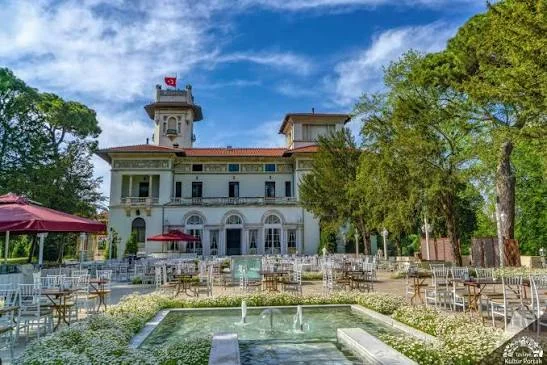
Where Was Yasak Elma (Forbidden Fruit) Filmed? — Real Istanbul Locations
Yasak Elma (Forbidden Fruit) filming locations: the Argun yalı in Yeniköy, the Khedive's Palace you can visit, and how to see them all from Sultanahmet.
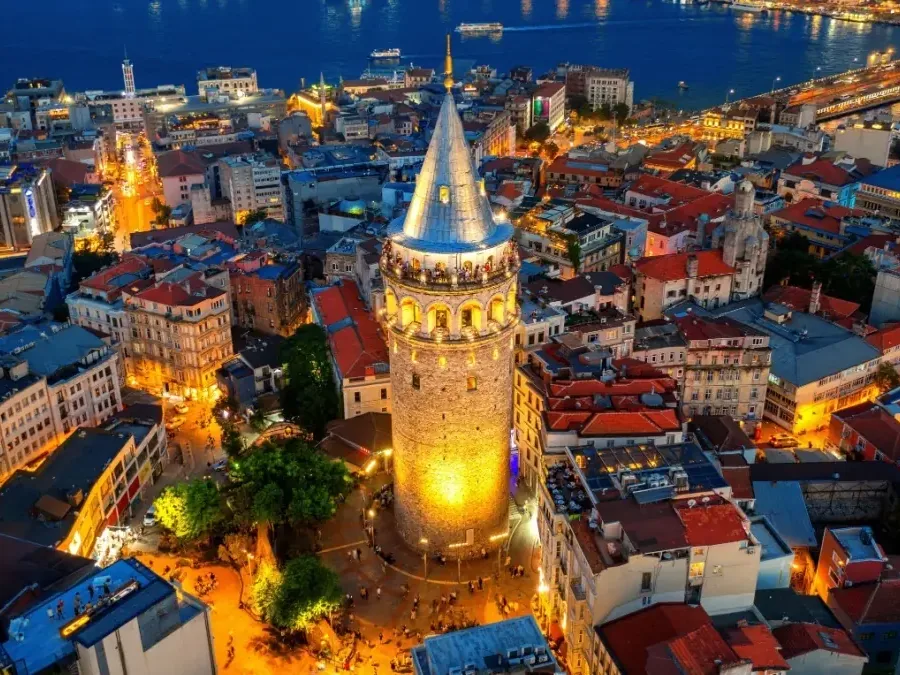
Galata Tower 2026 — €30 Tickets, Hours & Is It Worth It?
Galata Tower 2026: €30 entry, a day session 08:30–18:15 and a night session 19:00–23:00, open every day. When to go, how to skip the worst queues, and how to get there from Sultanahmet.
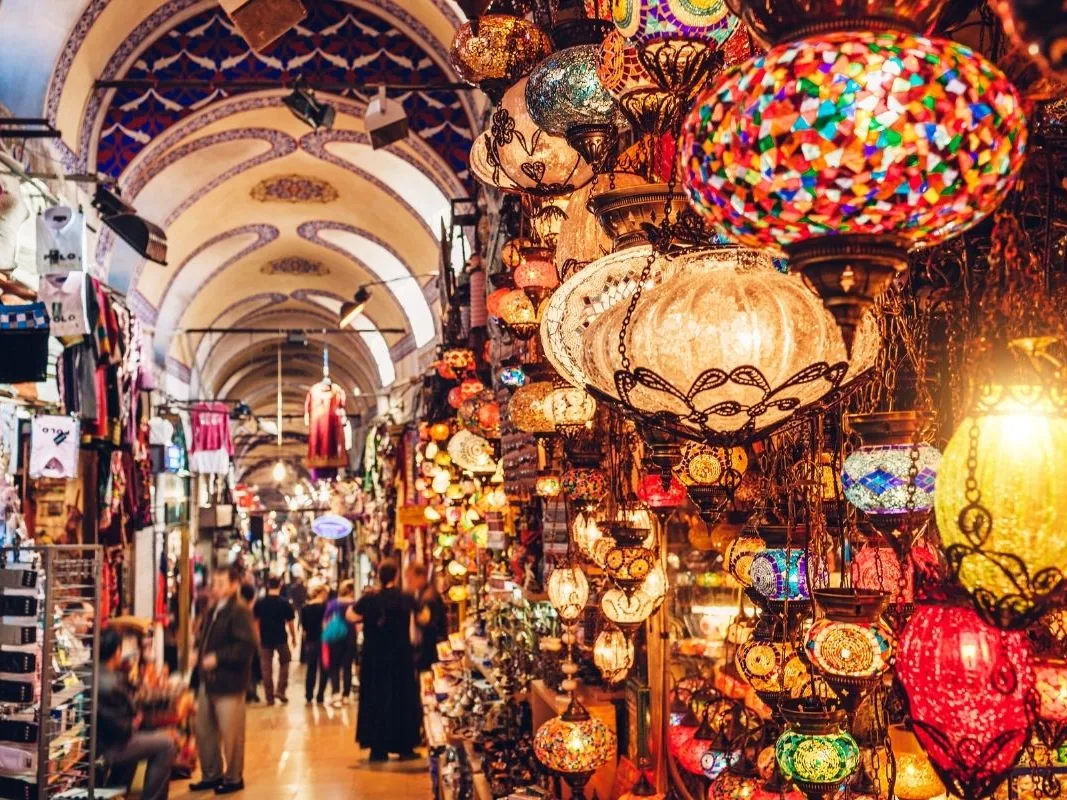
Grand Bazaar Istanbul 2026 — Hours, Prices & Bargaining
Grand Bazaar 2026: open Monday–Saturday roughly 9:00–19:00, closed Sundays, free to enter. Which gate to use, what things cost and how to bargain — from a hotel 10 minutes' walk away.